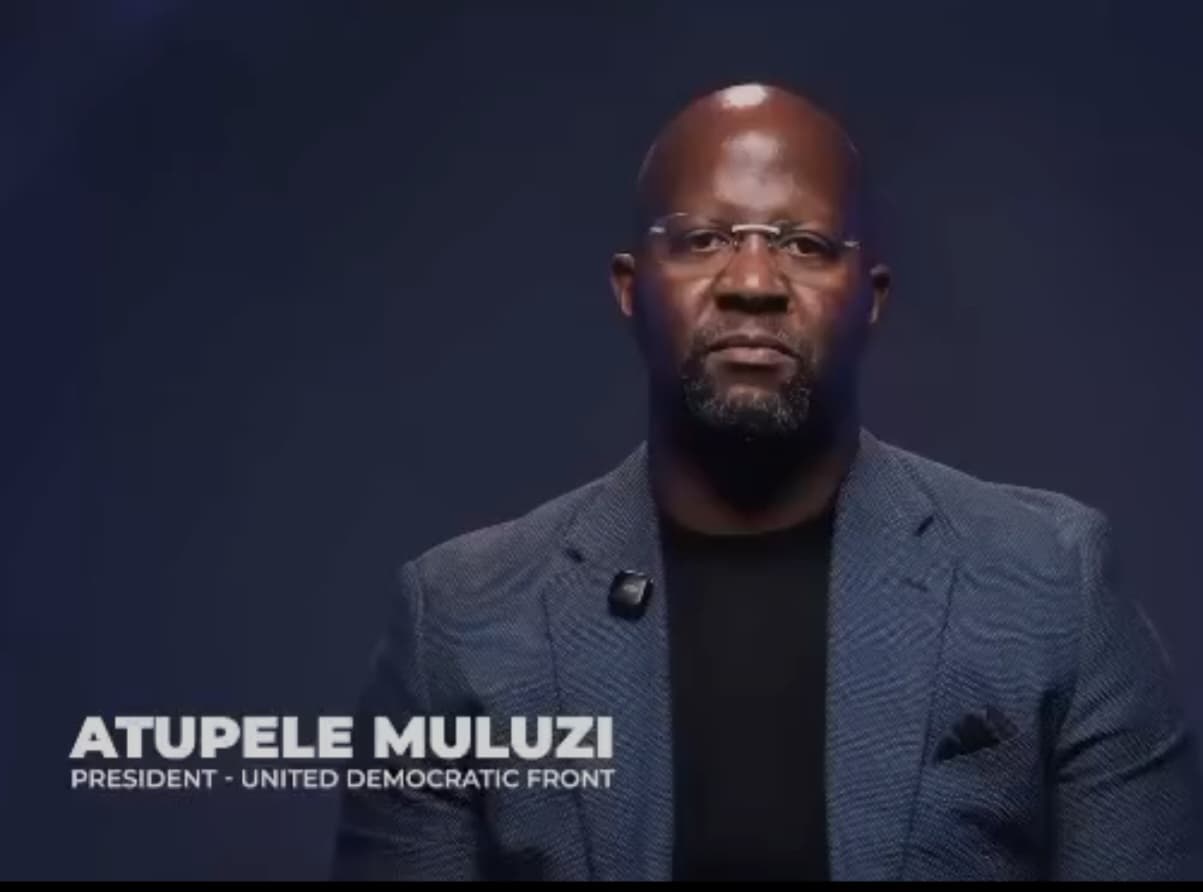
Social commentator Onjezani Kenani has publicly praised UDF president Atupele Muluzi for what he describes as a marked shift in political engagement, contrasting Muluzi's relative quiet between 2020 and 2025 with his more active public commentary in the current political cycle.
In a Facebook post, Kenani said that during the earlier period, Muluzi "would emerge once in a while, make a concrete contribution to the national discourse, and then retreat into the shadows."
He said Muluzi is now "actively engaging with the issues of the day, offering almost running commentary on emerging developments" and contributing what Kenani called constructive thinking on the way forward.
Kenani framed the shift as a positive development for Malawi's public discourse more broadly, arguing that the country benefits from political leaders who "consistently engage with national issues, offer ideas, and help shape the conversation," rather than those who, in his words, disappear after elections only to resurface during the next campaign cycle.
Kenani's post comes at the back of two recent examples of Muluzi's commentary. On the IMF's announcement of progress toward a new Extended Credit Facility programme for Malawi, Muluzi wrote that the development marked "a positive step forward for Malawi," while cautioning that it was "not yet an approved programme."
He said IMF support was needed to help stabilise the economy, restore foreign exchange availability and rebuild confidence, but stressed that a Fund programme "is not the solution by itself."
Malawi, he said, must use any resulting breathing space to grow exports, attract investment, create jobs and build a more productive economy, summarising his view as "stabilisation first, growth next."
In a separate post, Muluzi addressed frustration among young Malawians directly, saying: "I hear the frustration of many young Malawians, and I share your concern about the challenges facing our country. I am not your enemy, and when I speak, I am not speaking against you, I am speaking for you."
He said criticism of government should not be equated with hostility, noting that he had criticised previous administrations and would continue to criticise the current one where he believed it was getting things wrong, while acknowledging areas where he believed it was getting things right.
He said the shared goal across Malawi's political divide was "a better Malawi, with opportunity, dignity and hope for every Malawian."