The government has called on the private sector to increase investment in Malawi's agrifood systems, saying this is key to driving industrialisation and economic diversification.
Speaking in Lilongwe at the 2026 National Agrifood System Investment Symposium, held under the theme "Unlocking Private Sector Investment for Sustainable Agrifood Systems Transformation in Malawi," Minister of Industrialisation, Business, Trade and Tourism Simoni Itaye said investment in agrifood systems would support value addition and inclusive prosperity in line with the Malawi 2063 agenda.
Itaye said Malawi needed to move agriculture beyond subsistence farming and turn it into a driver of broader economic transformation.
"Agriculture remains the backbone of the economy, contributing significantly to GDP, employing a large proportion of the population and accounting for over 80 percent of national exports, but the country continues to import processed agricultural products that could be produced locally," he said.
He pointed to the African Continental Free Trade Area's market of more than 1.3 billion consumers, saying Malawi could not afford to remain on the sidelines of that opportunity.
Itaye reaffirmed the government's commitment to working with the private sector to build more resilient value chains, raise farmer incomes, promote agro-processing and expand export opportunities.
He also called for production and value addition to be aligned with regional transport corridors, identifying products that could be processed locally before being exported to markets such as Tanzania and Mozambique.
He said this approach would help reduce reliance on imports while creating jobs and strengthening the country's industrial base.
Minister of Agriculture, Irrigation and Water Development Roza Fatch Mbilizi said the Malawi Legacy Investment Programme had identified seven value chains offering bankable opportunities for private investment: maize, rice, soybean, groundnuts, beef, aquaculture and honey.
Mbilizi said the programme would promote an anchor-firm model, linking investors and processors with smallholder farmers, aggregators, financial institutions, input suppliers, mechanisation services, and domestic, regional and international markets.
"Government will support the model through infrastructure and enabling conditions, including access to land, irrigation, roads, electricity and storage facilities, while encouraging the private sector to take the lead in driving commercialisation," she said.
Malawi Confederation of Chambers of Commerce and Industry president Ronald Ngwira said Malawi had the resources needed to build competitive and sustainable agrifood systems, including fertile soils, labour and water, but needed to urgently remove barriers constraining investment and trade.
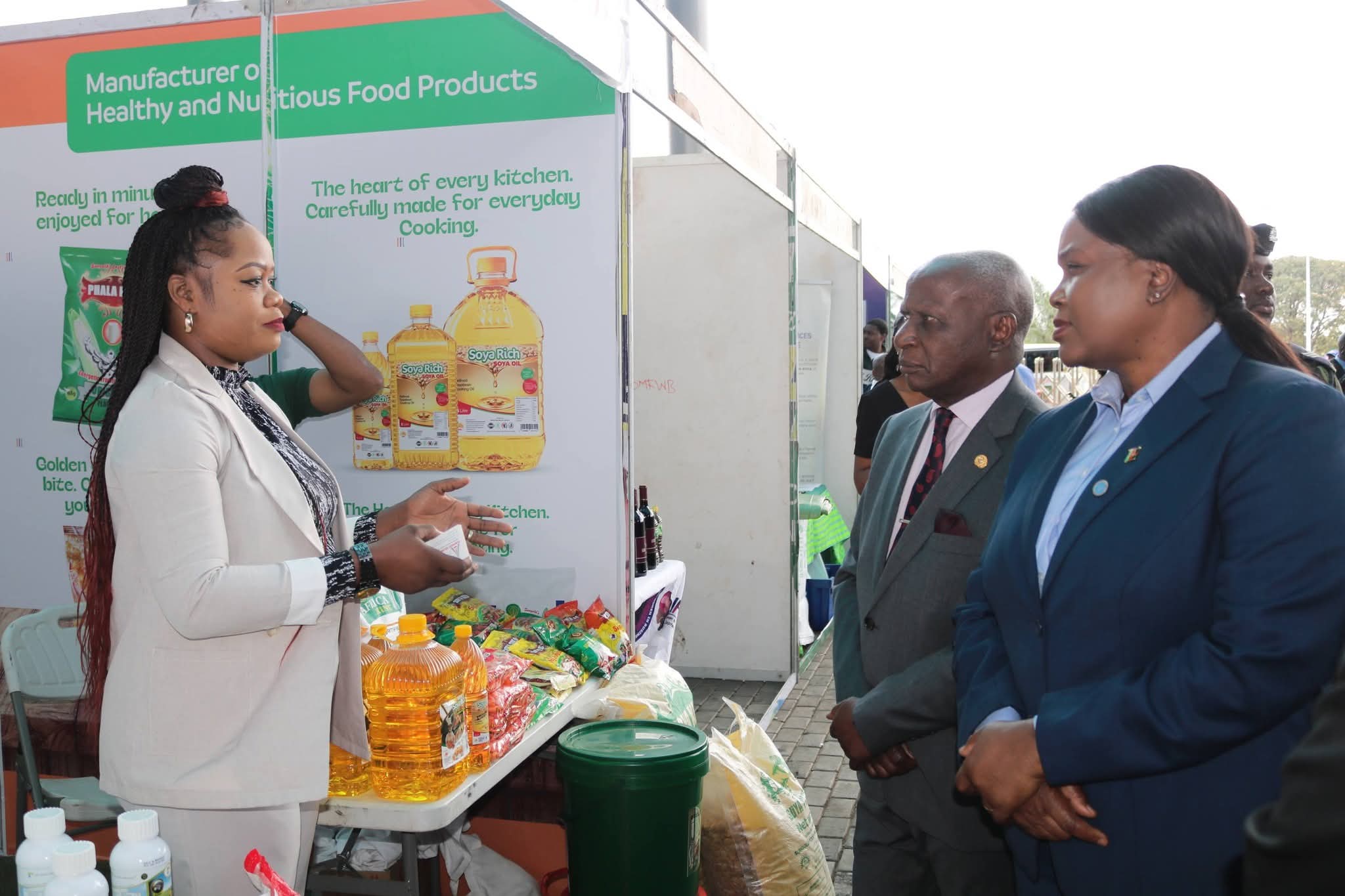
Earlier, the two ministers toured pavilions set up by private sector players to showcase their products.