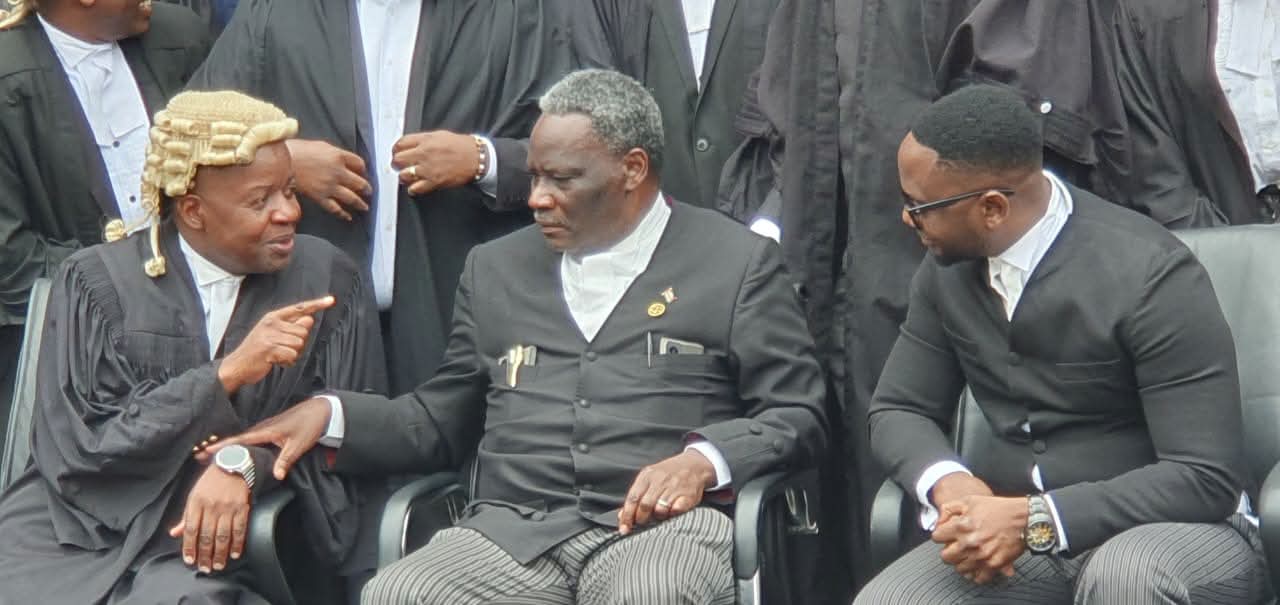
There is a particular kind of appeal that judges rarely have to make — not for a verdict to be respected, but for the institution itself to be believed in. That was, in essence, the request Chief Justice Rizine Mzikamanda put to Malawians in Blantyre on Friday, urging the public to keep faith with the judiciary even as he acknowledged, in the same breath, that the system delivering justice is still struggling to function as it should.
The occasion was the formal opening of the 2026/2027 judicial calendar — the kind of ceremonial milestone that, in a healthier year, might pass with little more than procedural remarks. Instead, it became a forum for something closer to collective stocktaking, with the judiciary and the executive each offering their own account of what is holding the system back.
Attorney General Frank Mbeta's contribution was notably candid. He did not dispute that judgments are taking too long to arrive, nor pretend the concern was unfounded; he acknowledged it directly, attributing the delays in large part to funding constraints the government says it is working to address.
It is a familiar admission in Malawian public life — the problem is real, the money is the obstacle, the fix is underway — but it carries particular weight when made about the institution responsible for resolving everyone else's disputes.
The sharper note came from Malawi Law Society president Davis Njobvu, who pointed to a structural gap rather than a budgetary one: the continued absence of an operational Judicial Service Commission.
The Commission exists, on paper, as the body meant to oversee judicial appointments, discipline and accountability — the mechanism, in other words, by which a judiciary answers for itself. Without it functioning, Njobvu's point was essentially this: trust is being asked for without the usual instrument that makes trust verifiable.
That juxtaposition is worth sitting with. A Chief Justice asking the public to believe in the courts is not, on its own, unusual — judiciaries everywhere depend on public confidence to function. What is less comfortable is doing so while the body designed to hold the institution accountable is not yet in place, and while the government's own law officer is conceding that delay has become a defining feature of how justice is currently delivered.
None of this amounts to a crisis of legitimacy, at least not yet. Institutions under strain are not the same as institutions failing, and today's event was, by most accounts, intended as a moment of honest reflection rather than alarm — an opportunity, as framed by those present, to take stock of progress and set a course forward.
But an honest reckoning also means naming the gap between the appeal being made and the apparatus needed to earn it.
Malawians are being asked to trust a judiciary that is, by its own admission, still waiting on the funding to move faster and the commission to prove it can police itself. That is not necessarily too much to ask. It is, however, a lot to ask on faith alone — and faith, as a principle of governance, tends to run thinner the longer it goes untested.