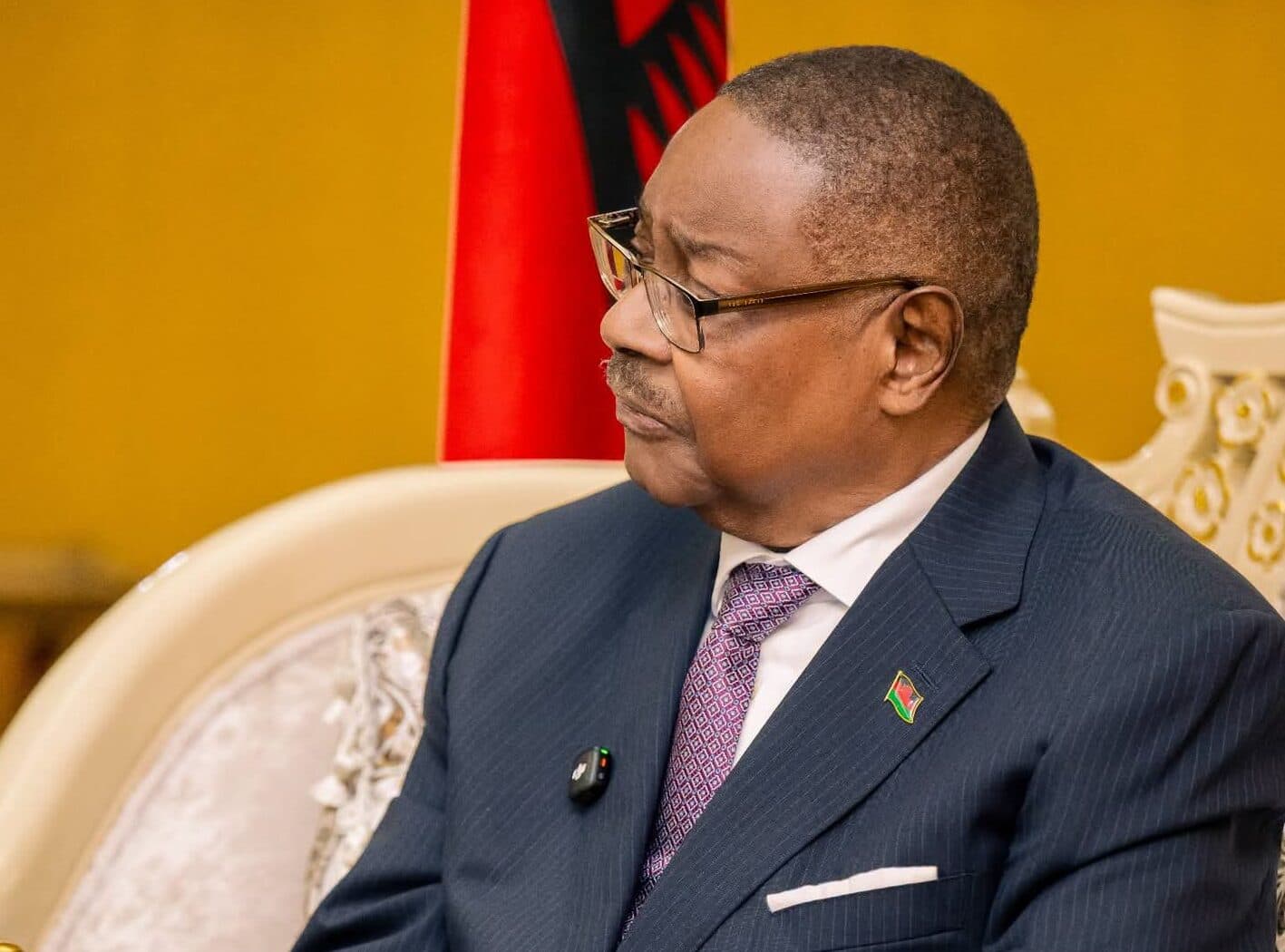
There is a particular rhetorical move politicians reach for when a year has gone neither brilliantly nor badly, and Peter Mutharika reached for it with real fluency on MBC this week: the rollercoaster. It is a useful word, because it promises motion without committing to a direction. Things went up. Things went down.
You, the listener, are invited to remember the thrill rather than interrogate the destination. What it does not do — what it is specifically designed not to do — is answer the only question that actually matters a year into a government's term: on balance, are Malawians better off than they were twelve months ago?
Mutharika's own answer, delivered in the interview that forms the basis of this report, was an unambiguous yes, built almost entirely around what his administration calls the 4Fs: food, fuel, forex and fertiliser.
And on the most visible of those, the numbers he cited are genuinely striking. A 50-kilogram bag of maize, he said, has fallen from over K100,000 to around K35,000 — a collapse in price that, if accurate and sustained, would be one of the more consequential economic facts in recent Malawian memory, given how directly maize price tracks with whether ordinary households can afford to eat. It is the kind of number a government is right to lead with.
But sit with that number for a moment longer, because it does something interesting to the rest of the interview: it sets an extremely high bar that the other three Fs do not clear.
On fuel, the President's own account shifted mid-sentence from achievement to caveat — supply was stabilised within the first twelve months, he said, before immediately conceding that it "now faces hurdles due to global challenges," attributing disruption to "the international situation, transportation, and so forth."
That is not quite an admission of failure, but it is a frank admission that the stabilisation he is claiming credit for is, in the present tense, not actually holding.
On forex, the hedging was even more explicit: relief is pinned to the conclusion of IMF talks over a revived Extended Credit Facility — a negotiation Malawi does not control the timeline of, and one that has not concluded. Hope, in other words, standing in for the achievement itself.
This is where the independent voices quoted alongside the President earn their place in the story, because they do something the President's own framing cannot: they hold the good and the bad in the same sentence rather than sequencing them as achievement-then-asterisk.
Economics Association of Malawi president Bertha Bangara-Chikadza credited the administration with real progress — free secondary education, interventions that have genuinely helped bring food prices down — while noting, in the same breath, that households and businesses are still living through four to six hours of load shedding a day, and that forex shortages continue to constrain economic activity broadly.
Her verdict, that "the first year shows some progress, but the recovery remains incomplete and fragile," is not a rejection of the President's case. It is, if anything, a more careful version of it — minus the rollercoaster metaphor, plus the inconvenient parts.
Governance analyst Gift Sambo's contribution points somewhere the 4Fs framework does not reach at all: institutional accountability.
His observation that "recent scandals involving critical public institutions suggest that the Mutharika administration is failing to enforce bureaucratic accountability" is a different kind of criticism from "the fuel supply has hiccups."
It is not about whether the government delivers outcomes; it is about whether the government can discipline the machinery beneath it when that machinery goes wrong.
A president can announce a falling maize price and a stabilising currency and still be presiding over institutions that nobody fully trusts to behave — and those are not the same achievement, however much they get folded into a single year-one narrative.
There is also a structural irony sitting quietly underneath this whole interview that is worth naming plainly: Mutharika is marking a year back in an office he was voted out of in June 2020, when Malawians handed him 38 per cent against Lazarus Chakwera's 58.7.
He has now returned with 56.8 per cent under the same 50-plus-one threshold that once worked against him. That is not evidence for or against his current record — electorates change their minds for reasons that have little to do with any single year's performance — but it is a reminder that "success," in Malawian presidential politics, has already proven itself to be a genuinely reversible judgment within a single decade.
The number that matters this time next year will not be the maize price alone. It will be whether the fuel stabilises without a caveat attached, whether the forex relief arrives rather than remains pending, and whether the institutions Sambo is worried about start looking disciplined rather than merely described as "being worked on."
A rollercoaster, after all, eventually has to come back down to the platform it started from — and voters tend to remember exactly where they were standing when it does.