USDMK 1742.500.00GBPMK 2214.800.00ZARMK 95.600.00EURMK 1887.300.00USDMK 1742.500.00GBPMK 2214.800.00ZARMK 95.600.00EURMK 1887.300.00
Live
Loading live headlines…
Nyasa Times
National

Minister Ben Phiri intervenes as Mtandire woman’s confiscated goods expose council’s vending contradiction

For Esnart Mshamboza, the confiscation of her business merchandise was more than the loss of goods. It was the crushing of a livelihood she had fought to build—and a moment of humiliation that eventually pushed her story onto social media. The Mtandire woman’s emotional ordeal has now reached the highest levels of local government after [...]

Nyasa Times News Desk

Nyasa Times News Desk

Nyasa Times Reporter

13h ago · 3 min read

Minister Ben Phiri intervenes as Mtandire woman’s confiscated goods expose council’s vending contradiction
Text size100%

For Esnart Mshamboza, the confiscation of her business merchandise was more than the loss of goods. It was the crushing of a livelihood she had fought to build—and a moment of humiliation that eventually pushed her story onto social media.

The Mtandire woman’s emotional ordeal has now reached the highest levels of local government after Local Government and Rural Development Minister Ben Malunga Phiri stepped in following a video of her complaint that went viral.

Mshamboza had alleged that Lilongwe City Council officials confiscated her merchandise over illegal vending even though, according to her account, she had been paying city rates and keeping the receipts as proof of those payments.

Her question was simple but devastating: How could the same council collect money from her business and then punish her for operating there?

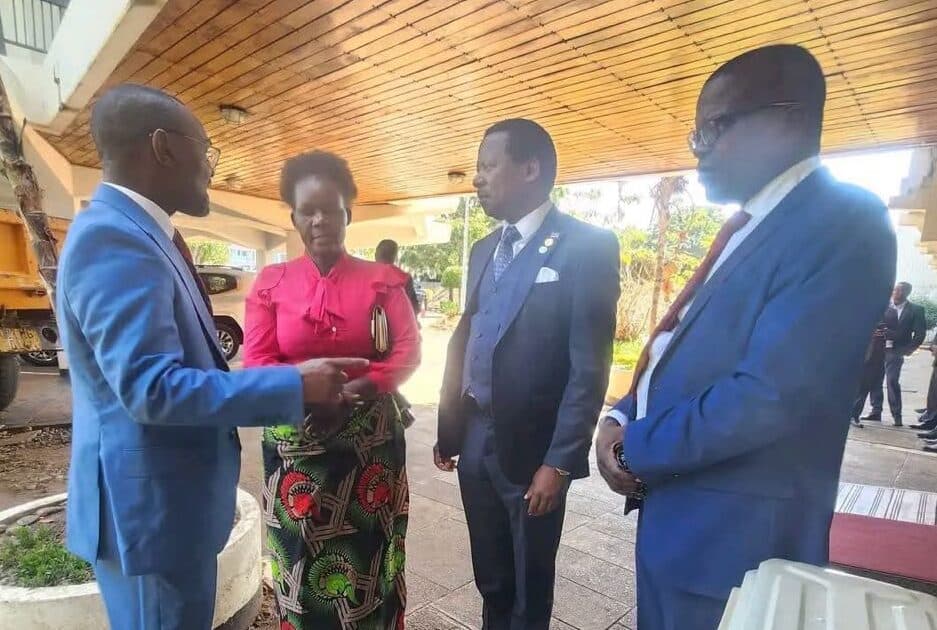
That contradiction confronted Phiri when he met Mshamboza together with Justice and Constitutional Affairs Minister Charles Mhango and the Lilongwe City Council chief executive officer.

Phiri did not mince his words.

“You cannot collect rates from someone operating in an illegal place and then turn around to confiscate their goods. That is contradictory,” he said.

The Minister’s intervention has thrown the spotlight on a problem that goes beyond one woman and one confiscated business.

For many low-income Malawians, vending is not simply a choice. It is a survival strategy—a way of putting food on the table, paying school fees and keeping families afloat in an economy where formal employment remains beyond the reach of many.

Yet Mshamboza’s experience raises a troubling question about the responsibility of authorities when they collect revenue from people operating in places they themselves consider illegal.

If a vendor is paying council rates, what does that payment mean?

Does it amount to permission to operate there—or does the council have a duty to tell the vendor that the location is prohibited before accepting the money?

Those questions now demand answers.

Phiri has directed that the council should provide designated places where vendors such as Mshamboza can conduct their businesses legally, potentially offering a way out of the cycle in which poor traders are allowed to operate informally, charged for doing so and later punished for the same activity.

But for Mshamboza, the intervention was also deeply personal.

As she sat before the officials recounting what had happened, emotion overwhelmed her.

The woman whose livelihood had appeared to vanish in a single confrontation with council officials was now being told that she would not have to start again alone.

Phiri pledged K500,000 to help her restart the business.

Well-wishers, he said, would provide a further K1 million, giving Mshamboza a potential K1.5 million in start-up support.

It was a dramatic turnaround for a woman whose story had begun with confiscated goods and a desperate appeal on social media.

Mshamboza thanked the Minister through tears, visibly moved by the intervention.

Her story, however, leaves behind a much bigger issue for Lilongwe.

The immediate question is how quickly Mshamboza can rebuild.

The bigger question is how many other vendors are trapped in the same contradiction—paying authorities while operating in places those same authorities later declare illegal.

Mshamboza may have received help to rebuild her business.

But her ordeal has exposed a system that must now explain why a struggling trader could be treated simultaneously as a revenue source and an offender.

#Featured#News

Discussion2

Comments are stored in local state for this demo.
  • GPGrace Phiri

    2h ago

    Finally some clarity on this. Thanks for the detailed breakdown.

  • JBJames Banda

    1h ago

    I hope the authorities actually follow through this time.

More from Nationwide

Who will defend the Speaker? Private lawyer hired as questions swirl over Attorney General's role
PoliticsNationwide
Who will defend the Speaker? Private lawyer hired as questions swirl over Attorney General's role

The legal battle over the Speaker's 12 parliamentary committees is on the front pages of both major dailies as the case reaches the High Court today. The Daily Times leads with "Speaker fights on", reporting that Speaker Sameer Suleman has hired private lawyer Bright Theu of Nicholls and Brookes to defend the committees. Its second [...]

NTNDNyasa Times News Desk · 1 min ago
NBM plc supports Financial Market Dealers Association conference with K5 million
BusinessNationwide
NBM plc supports Financial Market Dealers Association conference with K5 million

National Bank of Malawi (NBM) plc has supported the Financial Market Dealers Association (FMDA) with K5 million towards its 2026 Annual Lakeshore Conference, which aims to bring together financial market players to discuss challenges affecting the sector. The conference will be held from October 15 to 17 under the theme, ‘Managing Liquidity in a Constrained [...]

NTNDNyasa Times News Desk · 8h ago
Malawi's youth need opportunity, not trophies, activist Peter Mumba tells MPs
NationalNationwide
Malawi's youth need opportunity, not trophies, activist Peter Mumba tells MPs

A youth activist has accused Malawi's politicians of using football tournaments as a substitute for meaningful youth development, arguing that money spent on community trophies would be better invested in skills training, education and job creation. In a strongly worded statement that has gained wide attention on social media, Peter Mumba challenged Members of Parliament [...]

NTNDNyasa Times News Desk · 13h ago
Economist calls for fiscal, monetary, trade and regulatory reform to anchor Malawi's recovery
NationalNationwide
Economist calls for fiscal, monetary, trade and regulatory reform to anchor Malawi's recovery

Professor Paul Gadama, an economist, has urged the Malawi government to pay closer attention to four core policy levers — fiscal, monetary, regulatory and trade policy — arguing that a more coordinated approach across these areas is needed to address the country's deepening economic challenges. Gadama said sharper focus on these instruments could help shift [...]

NTNDNyasa Times News Desk · 19h ago